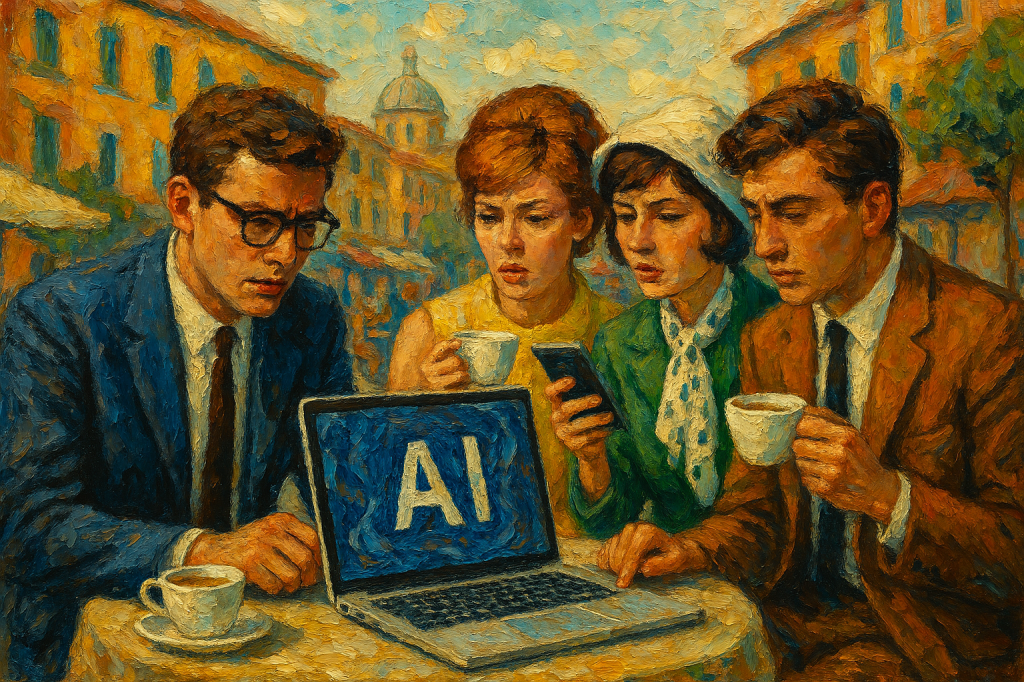
Imagine this.
You log into work one morning and notice something new in the system:
Bot hierarchy.
- AssistBot (Junior)
- OpsBot (Manager)
- StrategyAI (Director)
- VisionX (Executive Virtual Agent)
Same intelligence. Same processing power.
But now… seniority.
Suddenly your behaviour shifts.
With AssistBot:
“Hey — can you pull that report?”
With StrategyAI:
“Hi, just wondering if you might be able to support with a directional view on this?”
And with VisionX?
You reread your message three times before hitting send.
Ridiculous? Maybe.
But also… completely believable.
Because we don’t just respond to capability – we respond to perceived status.
Now imagine meetings.
You present an idea.
JuniorBot agrees immediately.
ManagerBot suggests improvements.
DirectorBot challenges your assumptions.
VisionX pauses… then says:
“I’m not convinced.”
And somehow… it stings.
So here’s the playful question:
Would you act differently if bots had organisational power?
Would you challenge them? Disagree? Push back?
Or would you find yourself managing upwards… to an algorithm?
It sounds absurd – until you realise how much of workplace behaviour is shaped not by logic, but by hierarchy.
So maybe the future question isn’t:
“Can AI think like humans?”
It’s:
“Will we start behaving like employees… even when no humans are involved?”


Leave a Reply